
Sales
Deals
A deal is money you're working for. Where a lead is a person who might buy, a deal is the specific opportunity — an amount, a stage, and a date you expect it to close.
Deals link to the people and companies involved, so opening a deal shows you who you're selling to, and opening a company shows you everything in flight there.
Pipelines and stages#
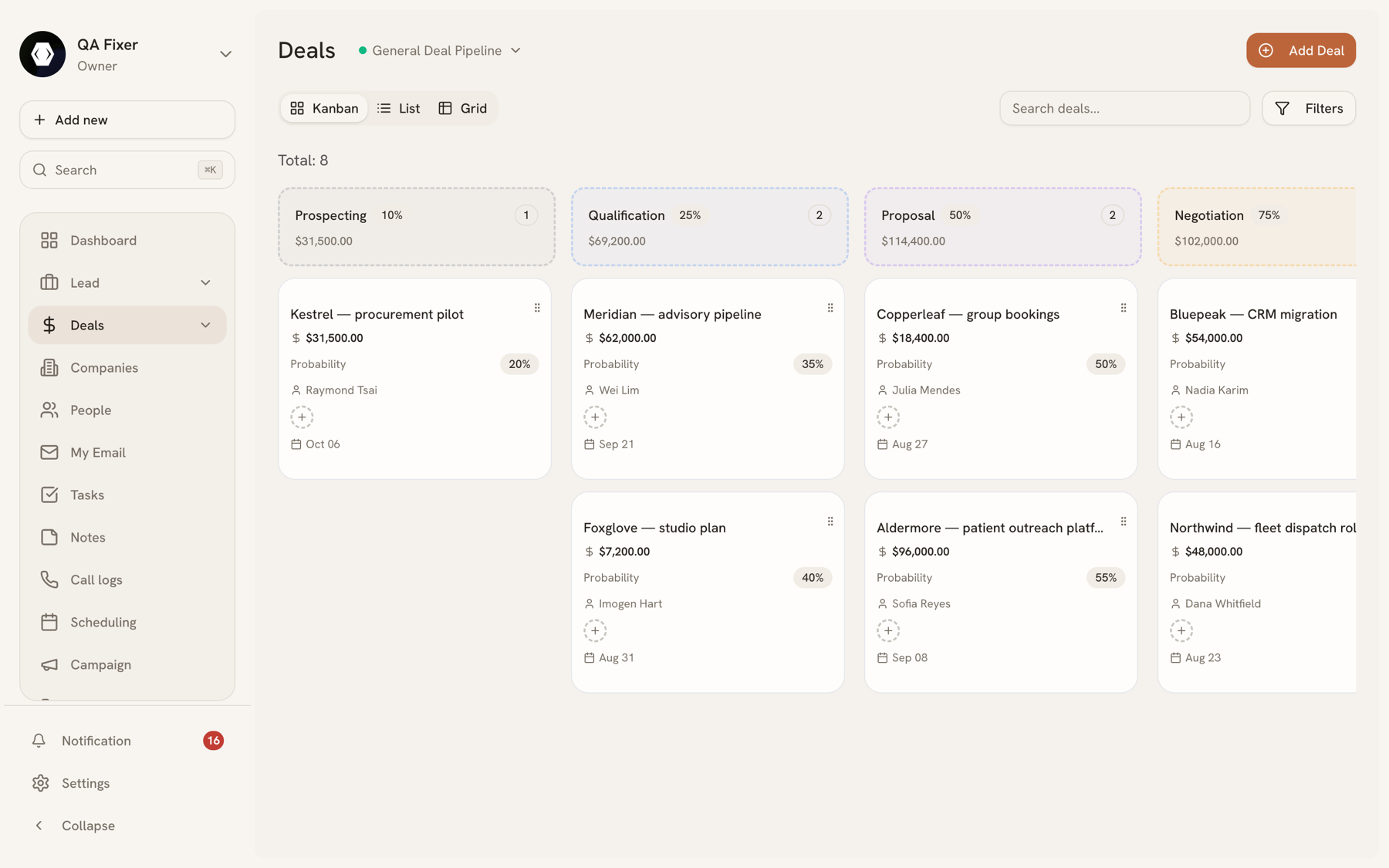
Deals move through a deal pipeline you define. New organizations start with General Deal Pipeline and six stages — Prospecting, Qualification, Proposal, Negotiation, Closed Won, Closed Lost — which you can rename, reorder, recolor, or replace entirely.
Two stage properties matter beyond the name:
- Probability — each stage carries a default likelihood of closing (Prospecting 10%, Negotiation 75%, and so on). Moving a deal to a stage syncs its probability, and you can override it per deal.
- Won / lost — one stage is marked as the won stage and one as lost. That's what feeds "Deal won" on the dashboard and closes the deal out of your open pipeline.
Because stages are yours to define, the names in your account may differ from these.
The three views#
- Kanban — cards in stage columns, with each column totalling its value. The fastest way to see where the money is sitting.
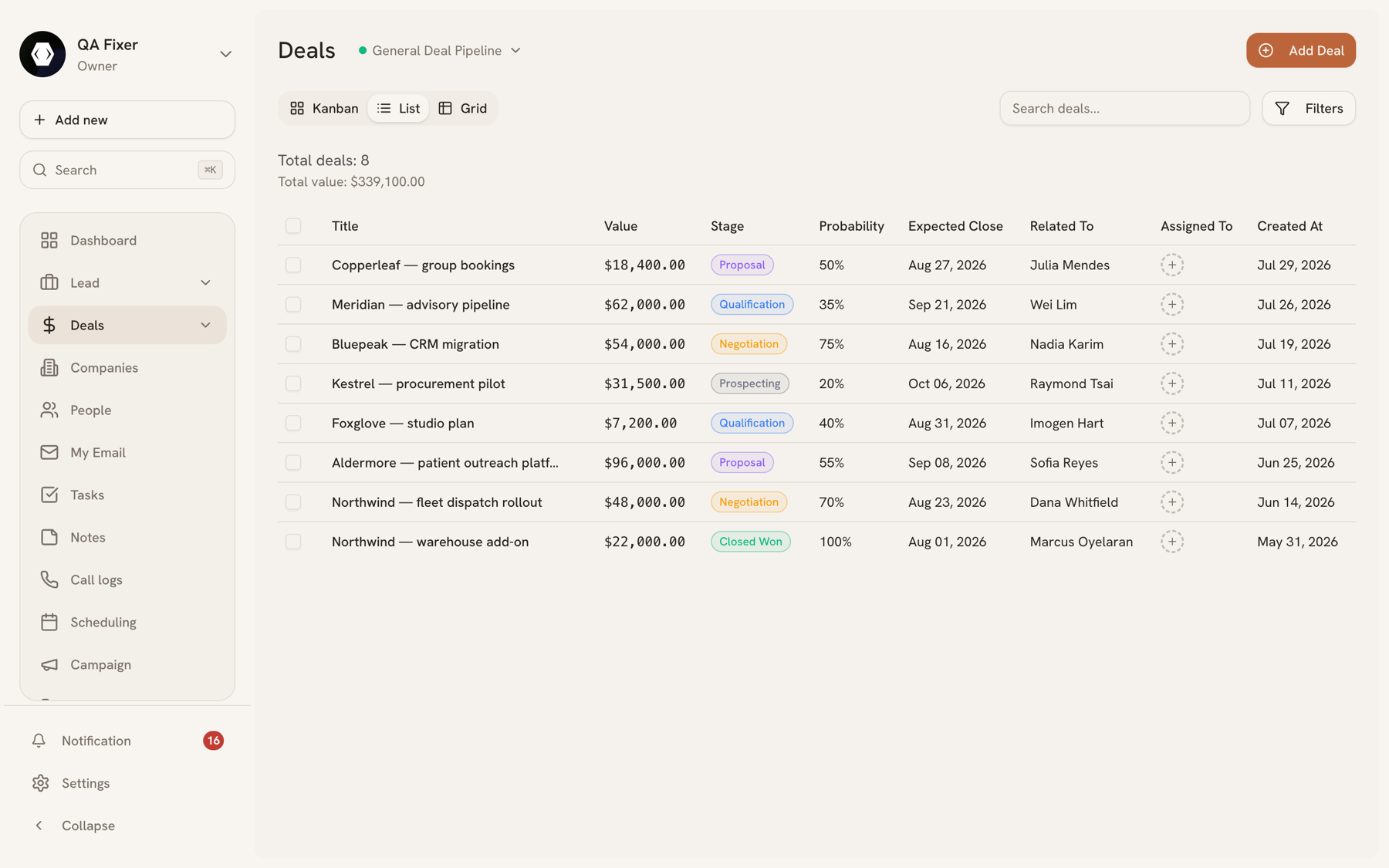
- List — the table view, with totals across the top: deal count and combined value.
- Grid — a dense spreadsheet with inline editing and a column picker.
What a deal holds#
| Field | Notes |
|---|---|
| Title | Required. |
| Value | The amount. Formatted in your organization's currency. |
| Stage | Position in the pipeline; sets probability. |
| Probability | 0–100%, auto-synced from the stage, overridable. |
| Expected close date | What forecasting reads. |
| Related to | The person, company, or lead this belongs to. |
| Priority | Low, medium, or high. |
| Description, tags, owner | Optional context. |
Working a deal#
Open a deal to find the same activity model as everywhere else — notes, tasks, emails, and attachments attached to the record, so the history travels with the opportunity rather than living in someone's inbox.
When a deal closes, move it to your won or lost stage. That's what makes revenue appear on the dashboard and takes it out of the open pipeline.
Last updated 2026-08-14